
Erie County Warrant Records
Erie County warrant records can be searched through the Sheriff's Office and local courts in the Buffalo area. The county keeps an active warrants database on the Sheriff's site, which makes it one of the more open counties in the state for this type of search. Arrest warrants, bench warrants, and search warrants are all tracked by Erie County law enforcement. Whether you need to check your own status or look up case info, you can start with the Sheriff's Office online list or call their warrant division. Erie County courts also issue and track warrants for criminal matters filed in this part of New York.
Erie County Warrant Records Overview
Erie County Active Warrants Database
The Erie County Sheriff's Office active warrants page is one of the best public tools in New York for checking warrant status. The list shows photos, names, last known addresses, physical descriptions, dates, warrant numbers, and the reasons for each warrant. The office makes an effort to keep this data current. If you think an entry is wrong or out of date, call the Warrant Office at (716) 858-3287 between 8:00 AM and 4:00 PM, Monday through Friday.
There are rules for using this data. You can not use the warrant list to harass or threaten wanted people or their families. Anyone who uses it to commit a crime faces prosecution under New York State law. If you know where a wanted person is, call the Erie County Sheriff's Office at (716) 858-2903. Tips are kept private. Do not try to grab anyone on your own.
The Erie County Sheriff's Office has been accredited by the New York State Division of Criminal Justice Services since 2013 and has 141 full time sworn staff. The office sits at 10 Delaware Avenue, Buffalo, New York 14202. The main phone line is (716) 858-7618. You can also send FOIL requests through their site for more detailed warrant records.
Erie County Warrant Search Tools
The screenshot below shows the Erie County Sheriff's active warrants database where the public can view current warrant listings.
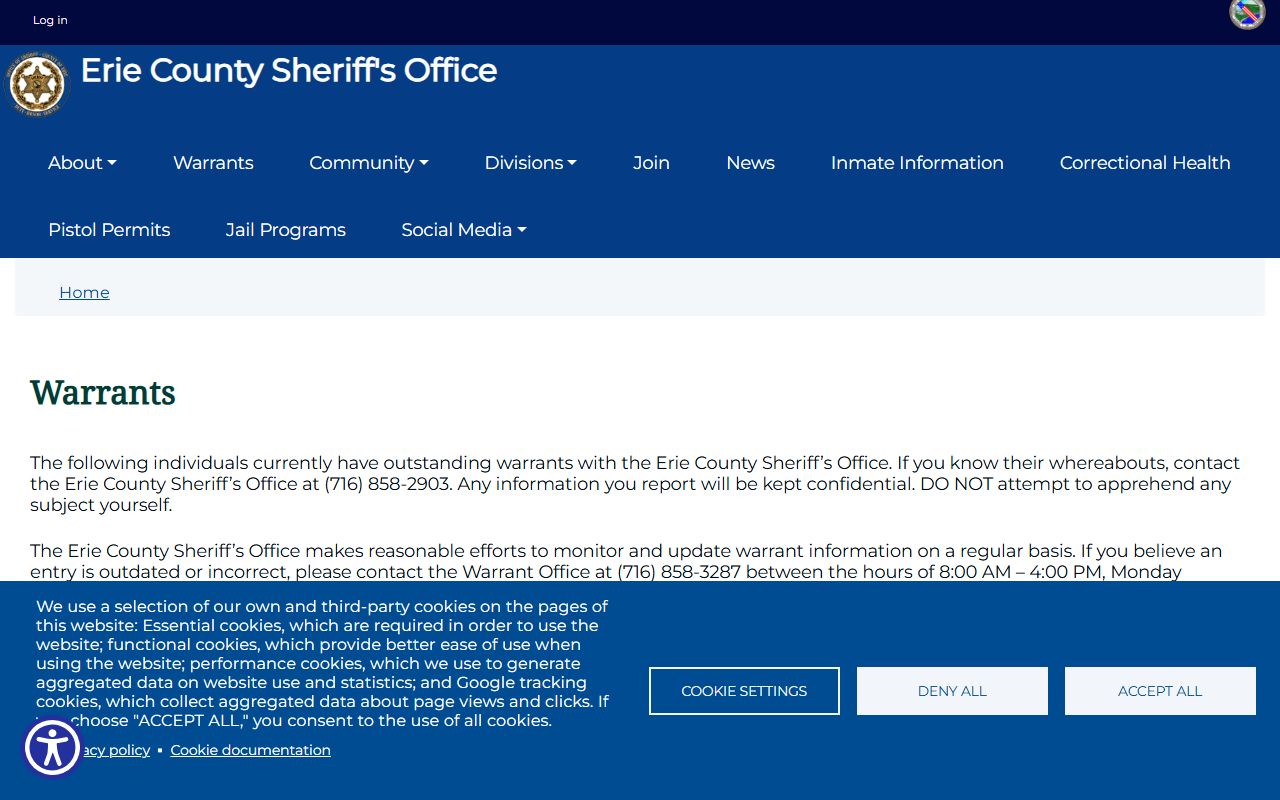
This page gets updated as warrants are added or cleared. It is one of the few county-level warrant databases in New York that is open to the public without a login or fee.
Courts in Erie County also issue warrants. Under CPL 120.80, a warrant of arrest can be served any day of the week and at any hour. The arresting officer must tell the person that a warrant has been issued. If asked, the officer must show the warrant. Erie County courts handle both felony and misdemeanor cases that may result in bench warrants when someone fails to show up for a court date.
Erie County Sheriff's Office Records
Beyond the online warrant list, the Erie County Sheriff's Office main site gives access to other services. The office runs a confidential crime tip line. You can use it to share info about warrant fugitives or other criminal activity in Erie County. FOIL requests for warrant records and other documents can be filed through their web portal as well.
The screenshot below shows the main page of the Erie County Sheriff's Office website.
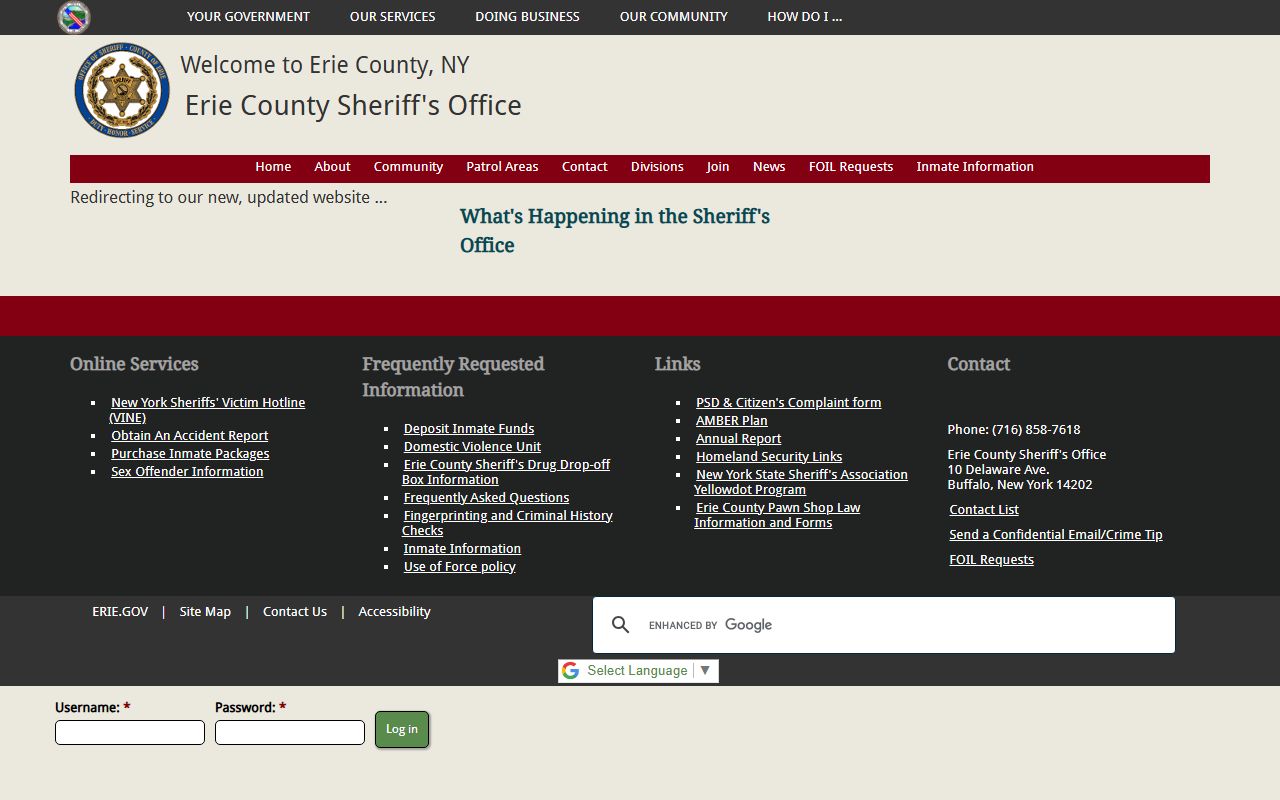
The Sheriff's Office also runs the Jail Management Division. That unit handles the county detention facility. The Mental Health Unit can be reached at 716-858-8095. A PREA tip line at 716-858-8176 takes reports on abuse or harassment in the jail. Calls come from both inmates and the general public.
Warrant Laws in Erie County
Warrant procedures in Erie County follow New York Criminal Procedure Law. CPL Article 120 covers arrest warrants from start to finish. Section 120.10 defines what a warrant of arrest is. Section 120.20 sets out what it must say. Section 120.30 spells out when a court can issue one. A judge needs probable cause to sign a warrant. Bench warrants come from CPL 530.70 when a person skips a court date.
Search warrants fall under CPL Article 690. A police officer, district attorney, or other public servant must apply to a court for one. The application has to include sworn facts that show probable cause. Once signed by a judge, the warrant lets officers search a specific place for specific items tied to a crime.
After an arrest on a warrant in Erie County, CPL 120.90 says the officer must bring the person before the court that issued the warrant without unnecessary delay. The officer must first handle fingerprinting and other police tasks. The arrested person has the right to make a phone call to get a lawyer or tell a friend or relative about the arrest.
Erie County Court Warrant Records
The Erie County Clerk's Office keeps court filings and case data. This includes civil court filings, criminal court cases, judgment records, tax lien info, and business certificates. You can search records by party name, case number, filing date range, or document type through the Erie County Clerk's Office.
The Division of Criminal Justice Services is the state-level source for fingerprint-based criminal history records. These records can include wanted info when a warrant is tied to a person's file. DCJS records are not public and can not be shared under FOIL. For Erie County warrant records specifically, the Sheriff's Office and local courts remain the best starting points.
Note: Erie County warrants have no set end date and stay active until the person appears in court or gets taken into custody.
FOIL Requests for Erie County Warrants
New York's Freedom of Information Law lets you ask for government records. Under Public Officers Law Article 6, all state and local agencies must respond to written requests within five business days. They can take up to 20 business days for harder requests. You can not be charged for looking at records. Copies cost up to 25 cents per page for standard sizes.
If an agency denies your request, you have 30 days to appeal. The agency head must explain the denial in writing within ten business days. If that fails, you can go to court under Article 78 of the Civil Practice Law and Rules. The agency has to prove the records fit an exemption. Some warrant records may be withheld if they would interfere with an active investigation or endanger someone's safety. But once a case is closed, most records open up to the public.
Erie County Cities
Erie County has several cities and towns. Buffalo is the county seat and the largest city. Warrant records for cases in these areas are handled by the Erie County Sheriff's Office and the local courts that serve each community.
Nearby Counties
These counties border Erie County. Each has its own Sheriff's Office and courts that handle warrant records for their area.