
New York Warrant Records
New York warrant records are kept by courts and law enforcement across the state. You can search for active arrest warrants, bench warrants, and search warrants through county Sheriff's Offices or the state court system. The state has 62 counties, and each one has its own Sheriff's Office that tracks warrant data for that area. Some counties post active warrant lists on their sites. Others need you to call or visit in person to check. The Division of Criminal Justice Services serves as the main state hub for criminal history records, though warrant checks work best at the local level. Start with the county where the case was filed to get the most up to date info on any open New York warrant records.
New York Warrant Records Overview
Where to Find New York Warrant Records
The Sheriff's Office in each county is the main place to look for warrant records in New York. Most of the 62 counties have a Sheriff that keeps track of active warrants for that area. Some, like Erie County and Onondaga County, post full warrant lists on their sites with names, charges, and photos. Others ask you to call or come in with a valid ID. It all depends on the county.
Courts also play a big role. Under New York Criminal Procedure Law Article 120, a local criminal court or superior court can issue an arrest warrant when there is probable cause to believe a crime took place. Bench warrants come from CPL 530.70 and get issued when a person fails to show up for a court date. Search warrants fall under CPL Article 690 and must be based on probable cause, backed by sworn statements, and signed by a judge. These are the three main types of warrants you will come across in New York.
The NYPD handles warrant matters for all five boroughs of New York City, which covers Kings, Queens, New York, Bronx, and Richmond counties. The NYC 311 line can help you check warrant status at (646) 386-4900. Outside the city, call the local Sheriff's Office or court clerk.
Note: Warrants of arrest in New York have no set end date and stay active until the person shows up in court or is taken into custody.
New York Warrant Records and Criminal History
The Division of Criminal Justice Services is the main state office for criminal history data in New York. DCJS keeps official records based on fingerprints, not just name searches. These records show arrests, court outcomes, and sentences. They can also include wanted info when a warrant is tied to a person's file. You must send in your own fingerprints to get your record from DCJS. You can reach them at 518-457-9847 or email RecordReview@dcjs.ny.gov for help with the process.
The screenshot below shows the DCJS Criminal History Record Review page where New York residents can start a request for their own rap sheet.
DCJS Criminal History Record Review page lets you begin the process of checking your own record.
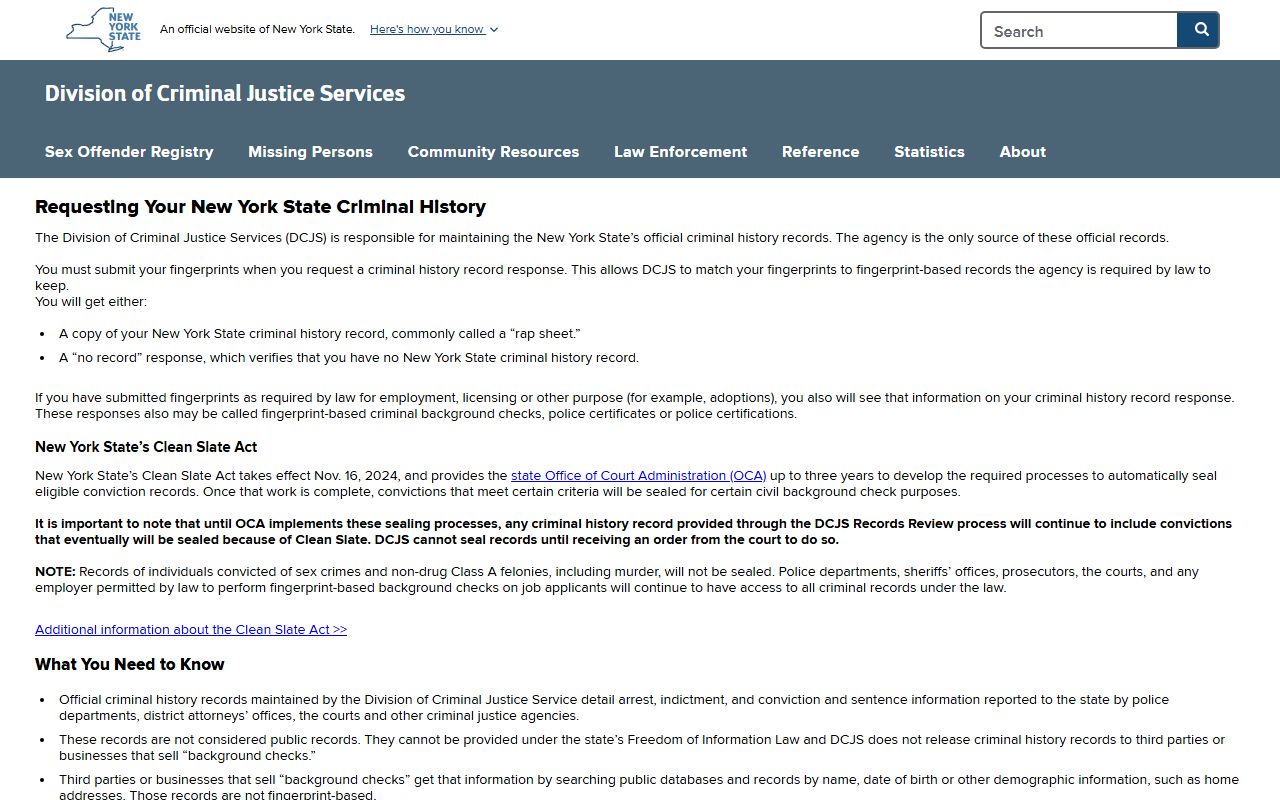
Criminal history records from DCJS are not public. They can not be shared under the Freedom of Information Law. Third party sites that sell background checks pull from public court data, not from the fingerprint based system at DCJS.
New York's Clean Slate Act, which took effect in late 2024, gives the Office of Court Administration up to three years to set up a system that will seal some old convictions. Records tied to sex crimes and non-drug Class A felonies like murder will not be sealed. This law changes how some records show up over time but does not affect active warrant records.
Search for Incarcerated Individuals in New York
The DOCCS Incarcerated Individual Lookup is a free tool run by the state Department of Corrections and Community Supervision. It shows who is in a state prison, where they are, and when they might get out. The tool also has data on people who left state prison going back to the early 1970s. You can search by name or by the person's Department Identification Number.
The DOCCS lookup instructions page explains how to use the search tool step by step.
The lookup runs from midnight to 11:45 PM on weekdays and 12:30 AM to 11:30 PM on weekends. There is a short break each night for system upkeep.
Some people will not show up in the DOCCS system. Youthful offenders are left out under CPL 720.35. People whose convictions were set aside by a court are also removed. Correction Law 9 says DOCCS must take down info on certain non-violent offenders five years after they finish their sentence or parole. But people convicted of violent felonies, sex crimes, or A-1 felonies stay in the system for good.
The Office of Special Investigations tracks people wanted by DOCCS who broke parole or have other outstanding warrants tied to their supervision. You can report tips about these wanted persons by calling 1-844-674-4697.
New York Sex Offender Registry and Warrant Records
DCJS runs the New York State Sex Offender Registry. This is a separate database from the warrant system but it ties into law enforcement work. The registry has three risk levels. Level 2 and Level 3 offenders show up in the online directory. For Level 1 offenders, you need to call 800-262-3257 with the person's name and one piece of ID like a date of birth or address.
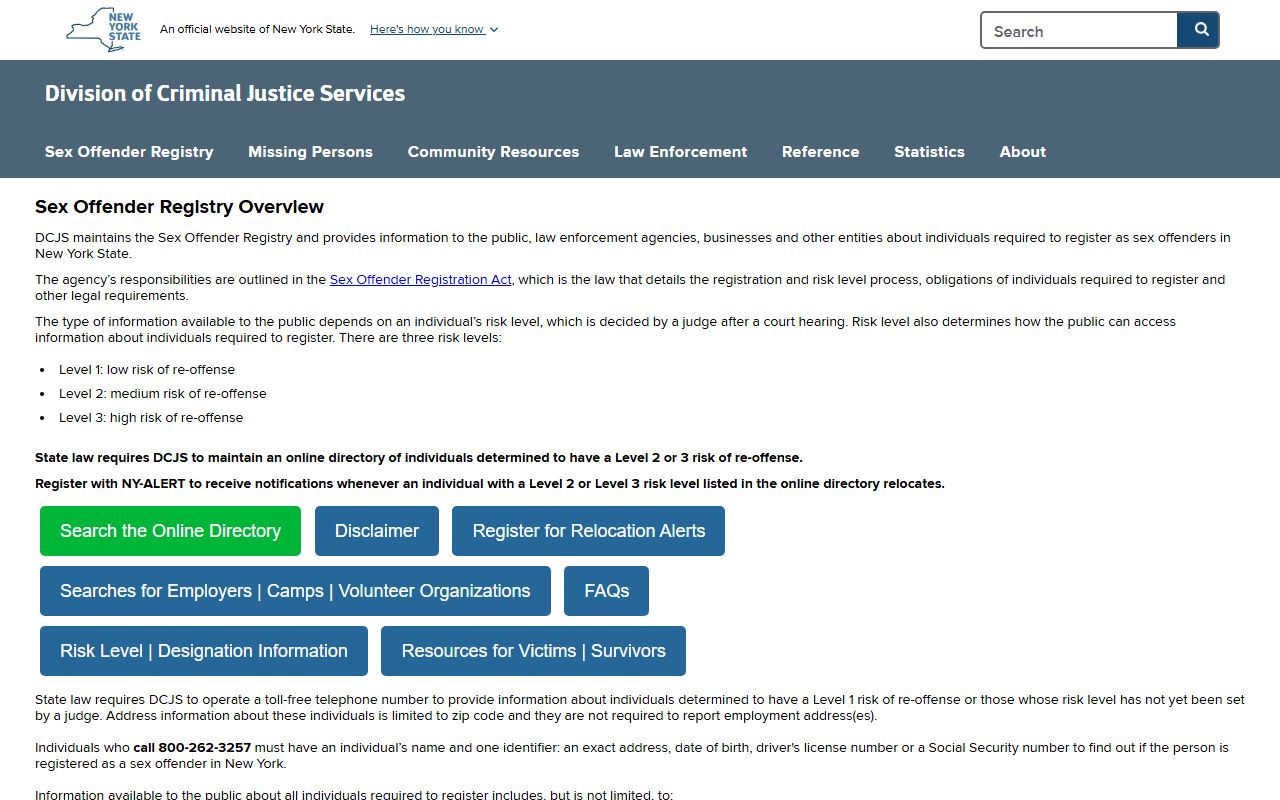
The public can see residence addresses, crimes of conviction, photos, and vehicle info for people on the registry. You can sign up for NY-ALERT to get a notice when a Level 2 or 3 offender moves. Registry staff are on hand from 8 AM to 4 PM on weekdays at 518-417-3384.
How to Request Warrant Records Through FOIL
The Freedom of Information Law governs how you get public records from any state or local office in New York. FOIL is spelled out in Public Officers Law Sections 84 through 90. It says all records are open unless a specific rule blocks them. An agency must respond to your written request in five business days. They can grant it, deny it with reasons, or tell you when to expect an answer.
Active warrants that have not been carried out are usually not open to the public. The law allows agencies to hold back records that would hurt an ongoing case or put someone in danger. But once a warrant gets served and the arrest goes through, that info often becomes part of the public court file. You can then get it through a FOIL request or by visiting the court clerk.
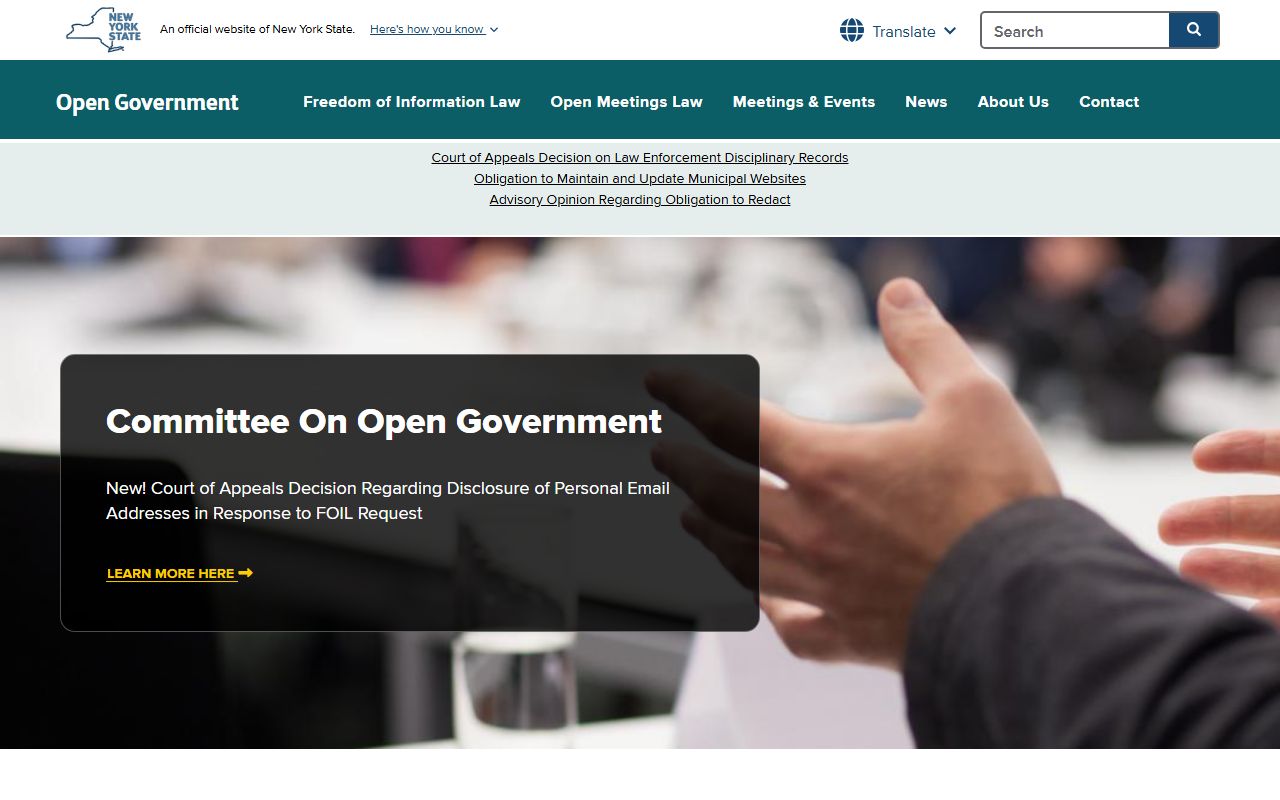
The Committee on Open Government helps people who hit roadblocks when trying to get records. They have written over 25,000 advisory opinions since 1993. You can call them at (518) 474-2518 or email coog@dos.ny.gov.
Fees for copies under FOIL can not go past 25 cents per page for standard size documents. There is no charge for just looking at records. If an agency denies your request, you have 30 days to appeal. The agency then has ten business days to give a full explanation or hand over the records.
Note: The courts are not subject to FOIL, but the Office of Court Administration is treated as an agency and must follow FOIL rules for its own records.
Types of Warrant Records in New York
New York issues three main types of warrants. Each one has its own legal basis and serves a different purpose. Knowing which type you are dealing with helps you figure out where to look and what to expect.
Arrest warrants come from CPL 120.10. A judge signs one when there is enough evidence to believe someone committed a crime. The warrant tells police to find and bring that person to court. Under CPL 120.80, a warrant of arrest can be carried out any day of the week, at any hour. The officer does not need to have the paper in hand at the time, but must show it to the person as soon as possible after the arrest.
Bench warrants get issued under CPL 530.70 when someone fails to show up for a scheduled court date. They can also come from not paying a fine or not meeting the terms of a court order. The judge issues them right from the bench. These are common in both criminal and family courts across New York.
Search warrants are covered by CPL Article 690. A police officer or district attorney asks a judge for permission to search a place, car, or person. The request must lay out probable cause and describe what they expect to find. Search warrants must be carried out within ten days. Under CPL 690.25, they can only be served between 6 AM and 9 PM unless a judge gives special permission for a night search.
- Arrest warrants stay active until served or pulled back by a judge
- Bench warrants remain open until the person appears in court
- Search warrants expire after ten days if not used
- Family court warrants deal with custody or support issues
- Civil warrants cover things like evictions and property seizures
What Happens After a Warrant Is Issued
Once a court puts out a warrant, police begin the work of finding that person. The Sheriff's Office in the county where the warrant was issued usually takes the lead. Under CPL 120.90, an officer who arrests someone on a warrant in the same county must bring them before the court without unnecessary delay. If the arrest happens in a different county for a felony, the same rule applies.
For lower level charges caught in another county, the person has the right to appear in a local court first to deal with bail or release. After any arrest on a warrant, police must handle fingerprints and other booking steps before bringing the person to court. The arrested person also has the right to make a phone call to reach a lawyer or tell a friend or family member what happened.
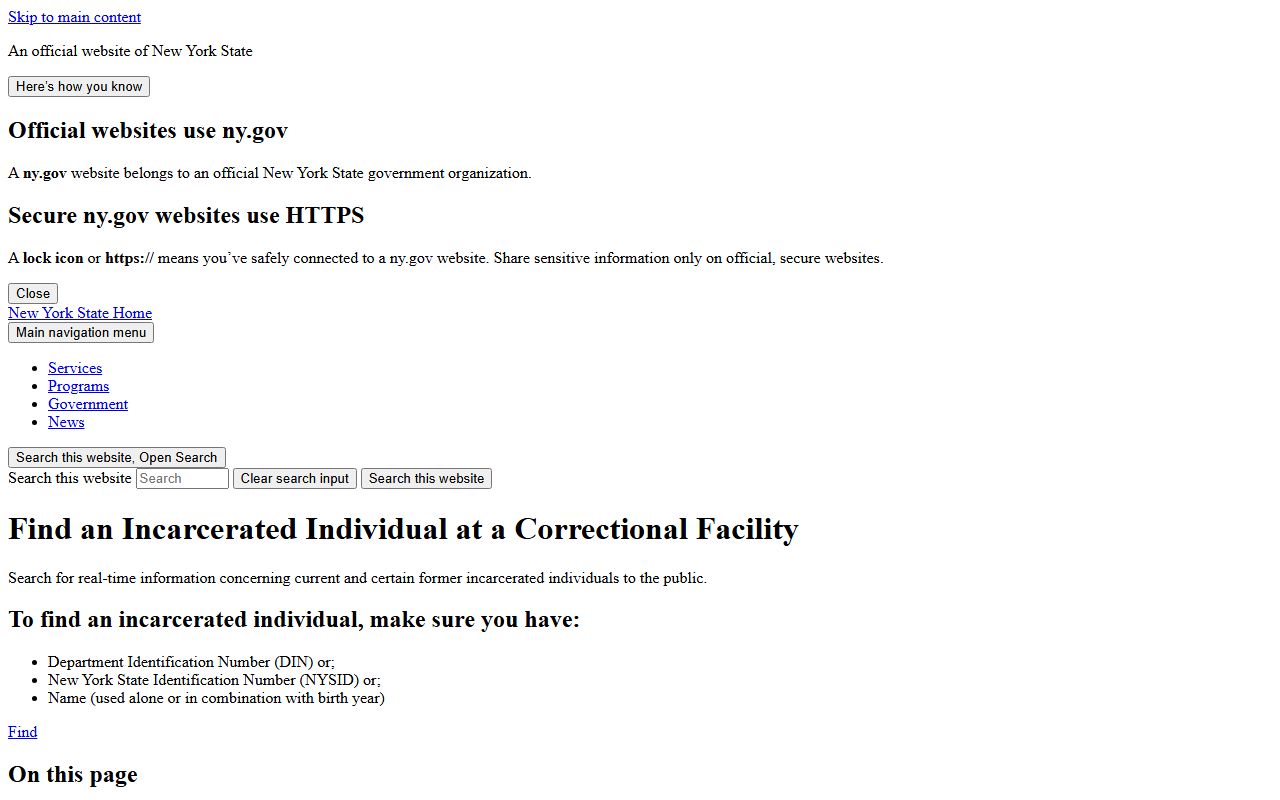
The NYS portal for finding incarcerated individuals can tell you if someone is in a state facility after a warrant arrest. Contact DOCCS at 1220 Washington Ave, Building 4, Albany, NY 12226-2050 for more info.
State Resources for New York Warrant Records
Several state offices can help with different parts of a warrant search. The Governor's Office accepts FOIL requests for its own records. The Department of Health and the Department of Environmental Conservation each have their own FOIL process for records they hold.
The Governor's Office FOIL page shows how to submit a request for records kept by the Executive Chamber.
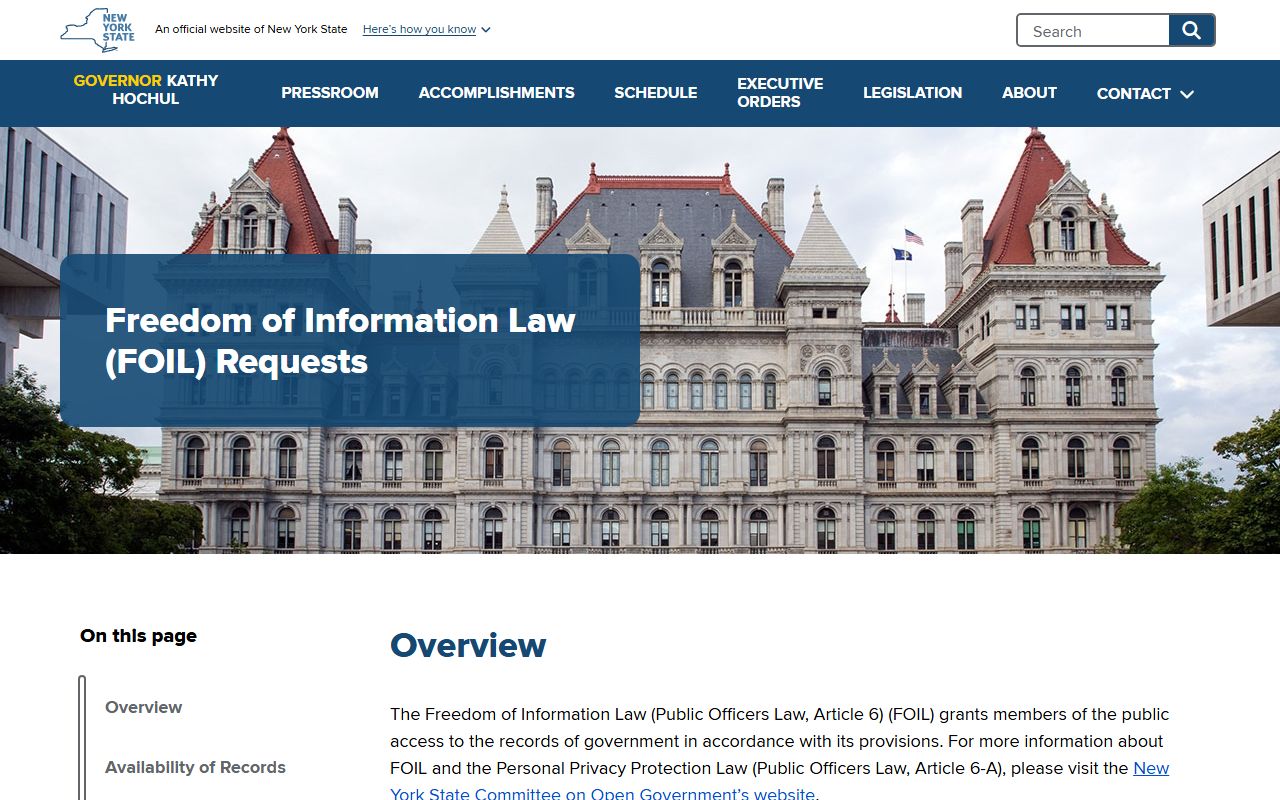
Requests go to Christopher Ritchey, FOIL Counsel, at the State Capitol in Albany. You can call (518) 408-2303 for details.
The Department of Health FOIL page has its own records access center where you can track requests online.
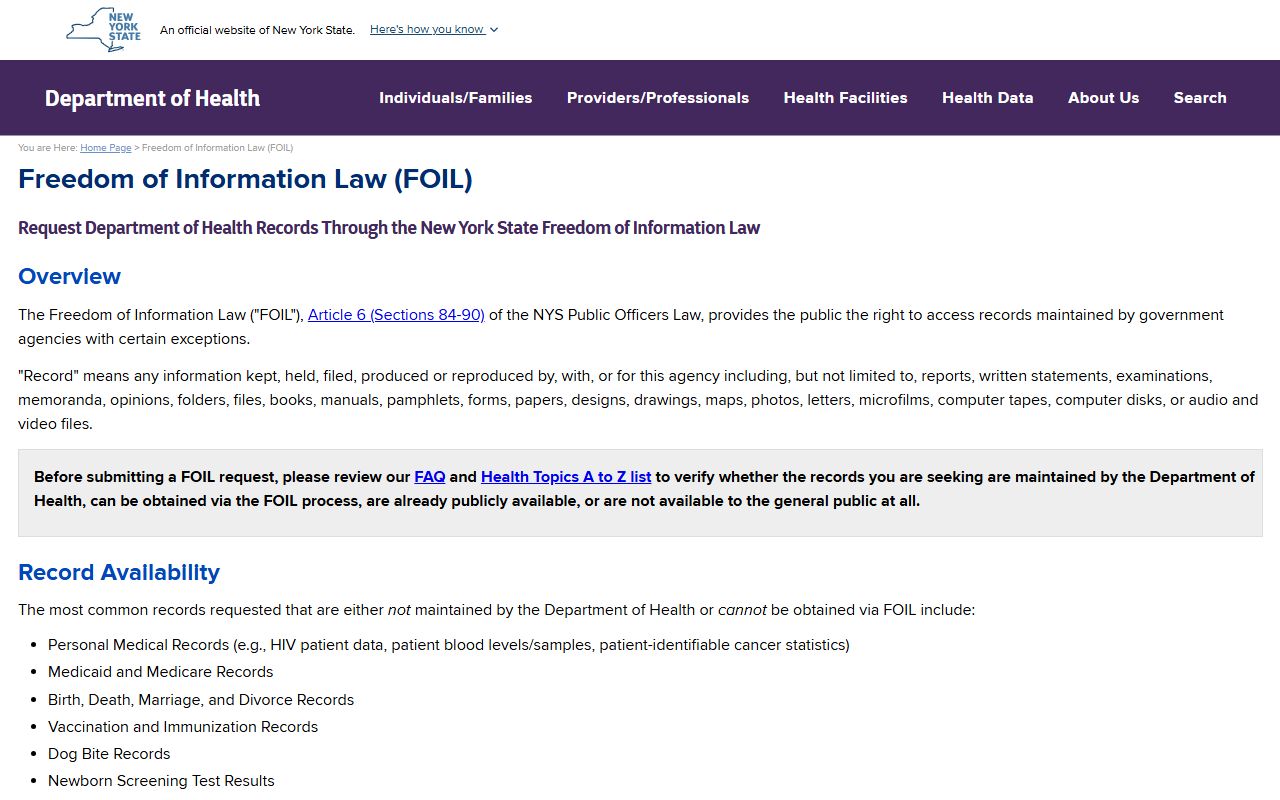
Each state agency has a Records Access Officer who handles FOIL requests. Be as specific as you can when you describe the records you want. Include dates, names, and any case numbers you have.
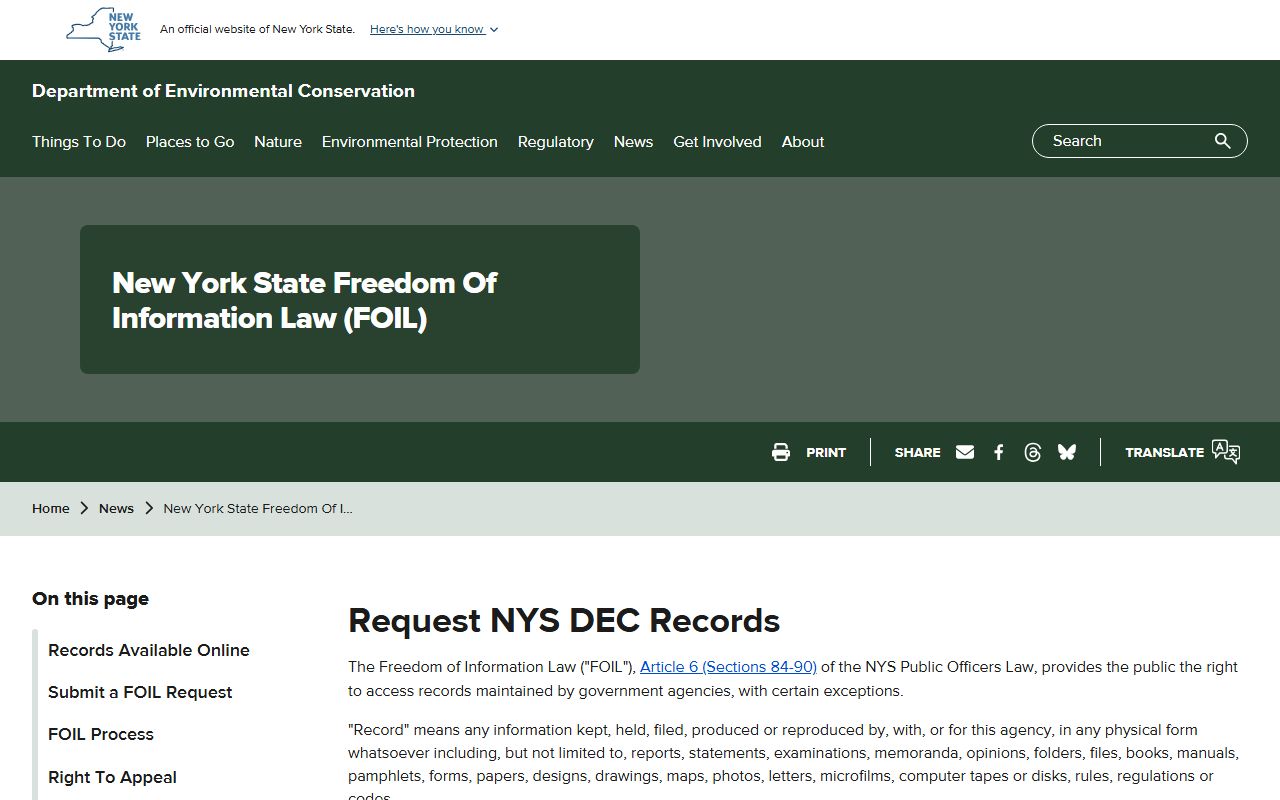
The DEC FOIL request system runs through a customer portal called GovQA. You can submit, edit, and track your requests there.
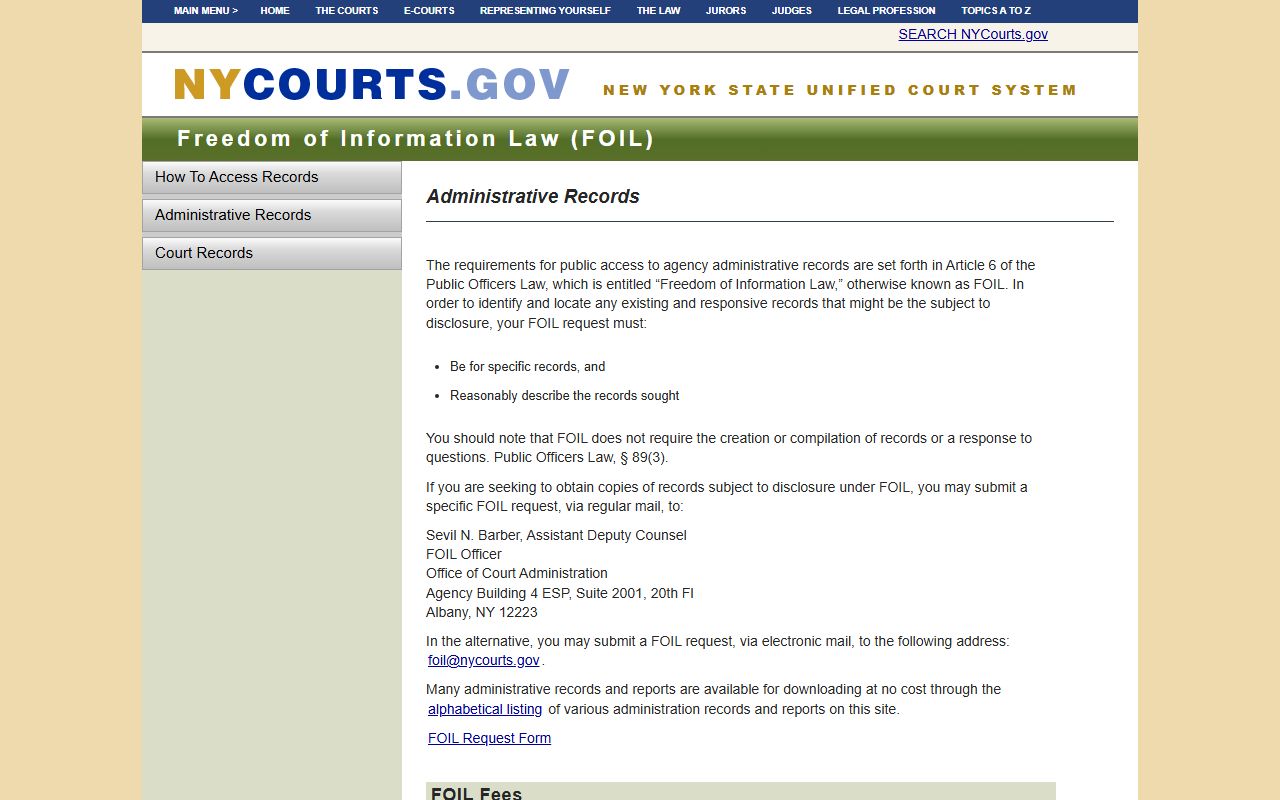
The Office of Court Administration handles FOIL for administrative records from the court system. Appeals go to Michael Siudzinski at 25 Beaver Street, 10th Floor, New York, NY 10004.
Browse New York Warrant Records by County
Each of New York's 62 counties has its own Sheriff's Office and court system that handles warrant records. Pick a county below to find local contact info, online lookup tools, and resources for warrant records in that area.
Warrant Records in Major New York Cities
Residents of major cities can look up warrant records through the Sheriff's Office in their county. Pick a city below to find out where to search for warrant records in that area.