
New York City Warrant Records
New York City warrant records span five boroughs and five counties, making the search process more complex than anywhere else in the state. The NYPD handles most warrant enforcement across Kings, Queens, New York, Bronx, and Richmond counties. Active warrants can be issued by NYC Criminal Court, Supreme Court, or any of the borough courts. Whether you need to check for an arrest warrant, bench warrant, or search warrant tied to a New York City case, the process starts with the right court or law enforcement office. Public access to these records is governed by state law, and some details can be found through the court system or by reaching out to the proper agency.
New York City Warrant Records Overview
NYPD and NYC Warrant Enforcement
The New York City Police Department is the main agency that handles warrant records across all five boroughs. With more than 36,000 sworn officers, the NYPD serves as the largest police force in the country. Warrants issued by New York City courts get entered into a shared law enforcement system. That means an officer in the Bronx can see a warrant issued in Brooklyn. The NYPD works with the NYC Sheriff's Office and district attorneys in each borough to track and serve these warrants. You can find your precinct through the NYPD site and ask about the status of a case in your area.
Bench warrants are common in New York City. Judges issue them when a person fails to show up for a court date. Under CPL 530.70, a bench warrant gives law enforcement the power to bring you back before the court. These come up often in traffic court, misdemeanor cases, and violation hearings. Missing even one date can trigger a bench warrant in New York City, and it stays on file until you deal with it.
Arrest warrants work differently. A judge signs one based on probable cause that a crime took place. Under CPL Article 120, the warrant must name the person, describe the offense, and direct police to bring the individual before the court. In New York City, the Criminal Court handles most of these for misdemeanors. Supreme Court deals with felonies. Search warrants fall under CPL Article 690 and let police search a place or person for evidence of a crime.
Warrant Records Across Five Boroughs
Each borough has its own county court system, and warrants are tied to the county where the case was filed. Kings County covers Brooklyn. Queens County covers Queens. New York County handles Manhattan. Bronx County covers the Bronx. Richmond County covers Staten Island. When you look for New York City warrant records, you need to know which borough the case came from. The NYC Criminal Court handles cases across all five boroughs and is a good starting point.
The NYC 311 system can also point you in the right direction for warrant info. You can call 311 or use the online portal to get basic details on how to check for warrants in New York City. Many people with bench warrants use the NYC Warrant Resolution Program when it runs, which lets you clear certain low-level warrants without getting arrested on the spot. This program has helped thousands of people deal with old cases they forgot about or did not know existed.
NYC Public Records Access
The NYC Department of Records and Information Services maintains a broad range of public documents. You can file a Freedom of Information Law request to get records from city agencies, though warrant records that are part of an active case may be withheld under FOIL exemptions. The law says agencies must respond within five business days. If they deny your request, you have thirty days to file an appeal under Public Officers Law Article 6.
The screenshot below shows the NYC Department of Records website, where you can start a FOIL request or search for city records.
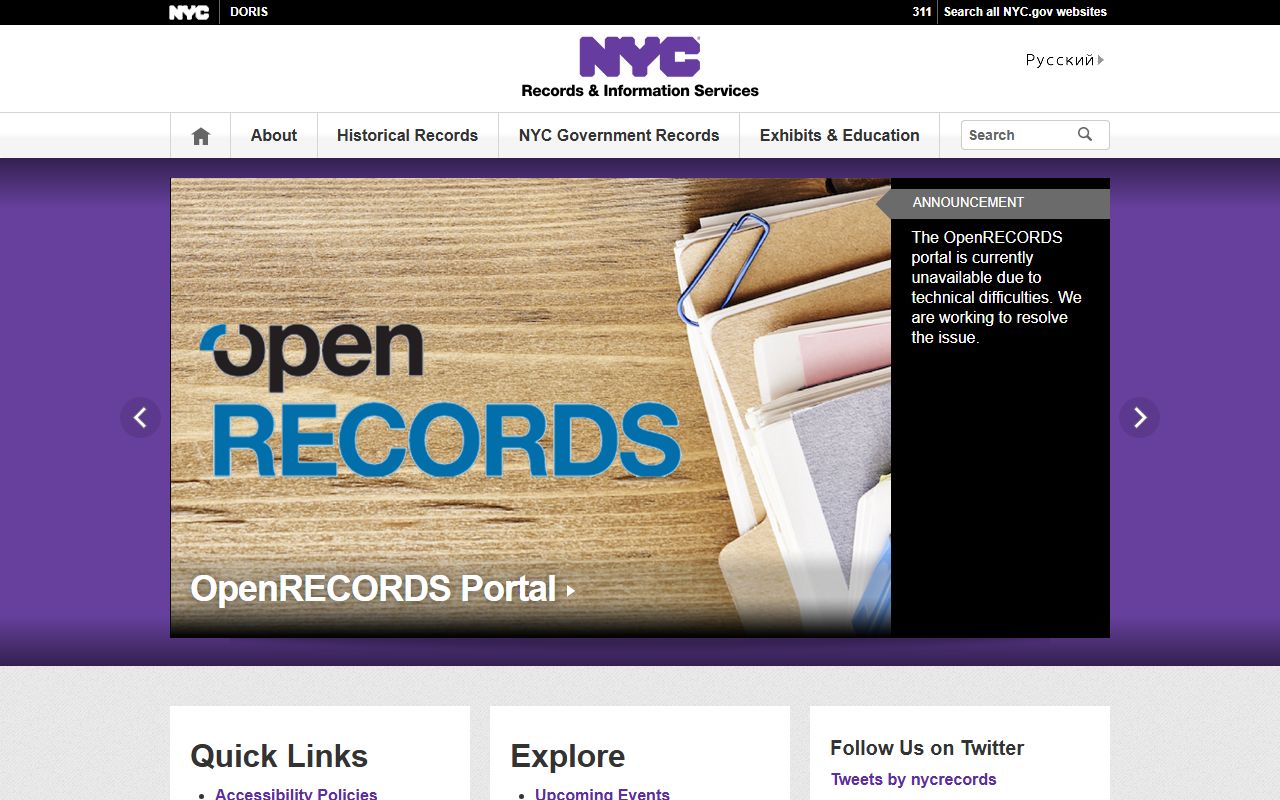
This portal is useful for getting reports and documents tied to resolved cases in the city.
Criminal history records are different from warrant records. The Division of Criminal Justice Services is the state agency that keeps official rap sheets. These records include arrest data, court outcomes, and in some cases wanted information tied to an NYSID number. But you can only get your own record from DCJS, not someone else's. You have to submit fingerprints to get a criminal history response.
How New York City Warrants Work
A warrant issued in New York City does not expire. It stays active until the person is picked up, turns themselves in, or the court recalls it. Under CPL 120.80, police can serve a warrant on any day, at any time. They do not need the physical warrant on them during the arrest, but they must show it as soon as possible if asked.
When an officer makes an arrest on a warrant in New York City, the process that follows depends on the charge. CPL 120.90 says the officer must bring the person before the issuing court without unnecessary delay. Before that, they handle fingerprinting and other intake steps. If the arrest happens in a different county, the person may have a right to appear before a local court first for bail or release on their own recognizance.
State Resources for NYC Residents
New York City residents can use several state tools to look into criminal records and related data. The DOCCS Incarcerated Individual Lookup lets you search for anyone currently or formerly in a state prison. It pulls from a database going back to the early 1970s. You need the person's name or their Department Identification Number to search.
The Sex Offender Registry is run by DCJS. It lists Level 2 and Level 3 offenders in a public directory that you can search online. For Level 1 offenders, you must call the toll-free line at 800-262-3257 with the person's name and one piece of identifying info.
The Committee on Open Government oversees FOIL and can help if an agency denies your records request. They have answered more than 25,000 written opinions since 1974 about how open records laws should be applied in New York.
Note: Warrant records tied to open cases may be exempt from FOIL under law enforcement investigation exemptions.
Record Sealing in New York City
New York's Clean Slate Act took effect on November 16, 2024. It gives the Office of Court Administration up to three years to build the systems that will automatically seal certain eligible conviction records. Convictions for sex crimes and non-drug Class A felonies like murder will not be sealed. For New York City residents, this could change what shows up on a background check in the coming years.
Before Clean Slate, sealing was handled through specific CPL sections. CPL 160.50 covers sealing when a criminal case ends in favor of the person charged. CPL 160.55 deals with certain violation and infraction convictions. CPL 160.59 lets a person apply to seal up to two eligible convictions after a waiting period. These sealing laws do not erase warrant records directly, but once a case is resolved and sealed, the related records get restricted from public view.
NYC Borough County Pages
Each borough in New York City is also a county. You can find more details about warrant records by visiting the county pages for each borough.
- Kings County (Brooklyn)
- Queens County
- New York County (Manhattan)
- Bronx County
- Richmond County (Staten Island)
Nearby Cities With Warrant Records
Several nearby cities also maintain warrant records through their local courts and police agencies. You may want to check these if a case was filed outside the five boroughs.
Yonkers sits just north of the Bronx in Westchester County. Mount Vernon is close by as well. On Long Island, Hempstead, North Hempstead, and Oyster Bay handle warrant records through Nassau County agencies. New Rochelle and White Plains fall under Westchester County jurisdiction.